
 By Pallavi Thakur
If you’re looking for the simplest way to measure coupon ROI, you could just compare revenue to cost and call it a day. But if you’ve ever run a promotion and thought, “Sales went up, but was this actually worth it?” — you already know it’s not that simple.
Coupons are one of the most powerful, low-cost tools a small business has. They bring in foot traffic, win back lapsed customers, and turn first-timers into regulars. But their real value rarely shows up all at once. A discount might close a sale today and spark a repeat visit or referral weeks later — which is exactly what makes ROI tricky to pin down.
This guide breaks down how to measure coupon ROI step by step, with formulas, real-world style examples, and a checklist you can reuse for every campaign.
Why Do Coupons Deserve a Place in Your Strategy?
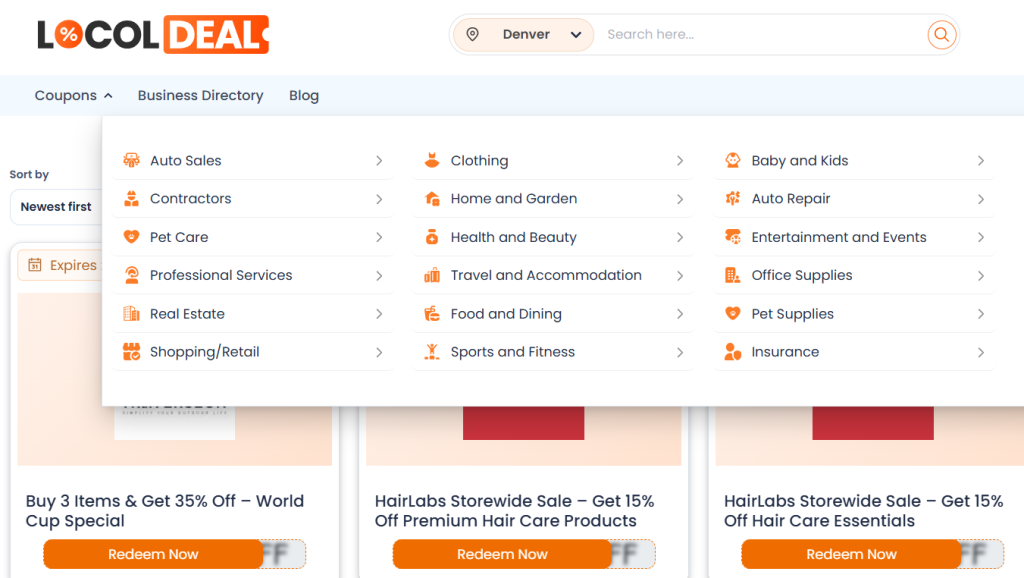
Attract new customers, keep them engaged, and increase word-of-mouth referrals by offering exclusive deals and coupons. With LocolDeal, you can reach a wider audience, build customer loyalty, and drive more sales without the hassle of expensive marketing campaigns.
Unlike a paid ad that interrupts someone’s scroll, a coupon meets shoppers exactly when they’re already looking to spend — which is why deal-driven traffic often converts faster and costs less per customer than traditional advertising. And because a good deal gets shared and talked about, it often keeps working long after the campaign technically ends.
Direct ROI vs. Indirect ROI
Most business owners only measure the obvious number — how much did I sell during the promotion? That’s direct ROI. But there’s a quieter, equally important return: indirect ROI.
| Direct ROI | Indirect ROI |
| Sales made using the coupon | Repeat visits after the first purchase |
| Revenue during the campaign window | Referrals and word of mouth |
| Redemption count | Reviews and social shares |
If you only track direct ROI, a campaign that “broke even” on paper might actually have planted the seeds for months of repeat business.
Key Steps to Measuring Coupon ROI
1. Set Clear Objectives and KPIs:
Every measurable campaign starts with a clear goal set before launch: more sales, repeat customers, or brand visibility? Each goal points to a different KPI.
Example: A café offers “$5 off orders above $25.” Instead of just counting redemptions, a smarter KPI is average order value increase or how many first-time visitors return within 30 days — this shows whether the discount builds loyal regulars, not just one-time bargain hunters.
Other useful KPIs: cost per new customer acquired, email/SMS list growth from sign-up-gated coupons, and abandoned carts recovered through the offer.
2. Track Campaign Costs Against Revenue:
Compare total revenue generated to everything the campaign cost — discount value, promotion, and any listing or design fees. Use this formula:
| ROI = (Revenue − Cost) / Cost × 100 |
Example: A salon’s campaign brings in $6,000 in bookings at a cost of $1,200.
| ROI = (6,000 − 1,200) / 1,200 × 100 = 400% |
That’s a 400% return — four dollars earned for every dollar spent, which is why coupons remain one of the highest-ROI tools available to small businesses.
3. Use Unique, Trackable Coupon Codes:
Issue unique codes per channel or customer instead of one generic code. This shows exactly where redemptions come from and makes codes far harder to misuse.
Example: A boutique gym uses separate codes for Instagram, email, and its LocolDeal listing, and discovers deal-platform traffic converts nearly twice as well as social media — so next quarter’s budget shifts accordingly.
4. Monitor Your Redemption Rate:
| Redemption Rate = (Coupons Redeemed / Coupons Distributed) × 100 |
Example: A bakery emails 1,000 subscribers and 150 redeem the offer — a strong 15% redemption rate, well above the low single-digit average for generic digital coupons.
A low rate usually means one of three things: the offer wasn’t compelling, it reached the wrong audience, or redemption had too much friction.
5. Test and Optimize Different Discount Formats:
Not every discount performs the same. Run two similar promotions side by side — say, 15% off vs. $10 off — and compare which drives more revenue and repeat visits.
Example: A pet grooming business tests weekday-only vs. weekend-only coupons and finds weekday offers drive far more bookings, since customers have more flexible schedules — reshaping how every future promotion is scheduled.
Also worth testing: timing (weekday vs. weekend), channel (email vs. social vs. a local deals platform), and audience (new customers vs. win-back offers for lapsed ones).
6. Prevent Fraud and Keep Data Clean:
Cap redemptions to one per customer, set expiry dates, and track digitally rather than relying on paper coupons that are easy to duplicate. Clean data means an accurate ROI calculation at the end, instead of inflated redemption numbers that don’t reflect real sales.
Coupon KPIs Worth Tracking
| Metric | What It Tells You |
| Break-Even Point | Redemptions needed before the campaign turns a profit |
| Redemption Rate | Share of distributed coupons actually used |
| Customer Lifetime Value | Long-term value of customers gained beyond their first purchase |
| Incremental Sales | Sales that wouldn’t have happened without the coupon |
| Cost Per Acquisition | Average cost of winning each new customer through the campaign |
| Engagement Metrics | Clicks, views, and shares — a sign of organic reach |
A Few Mistakes That Quietly Hurt ROI
- No clear goal before launch — without a KPI, you can’t tell a win from a loss
- Discounting too deep, too often — trains regulars to only buy on sale
- Measuring only campaign-day sales — misses the bigger repeat-visit return
- Using one generic code for everyone — makes it impossible to tell what worked
Run Coupon Campaigns Without the Overhead
You don’t need a marketing team or a big budget to run an effective, trackable coupon campaign — that’s exactly the gap LocolDeal was built to close.
LocolDeal is a free business listing platform that puts your business in front of local shoppers actively searching for deals nearby — no listing fees, no hidden charges. Whether you run a café, salon, gym, or boutique, getting listed puts you in front of an audience that’s already primed to buy.
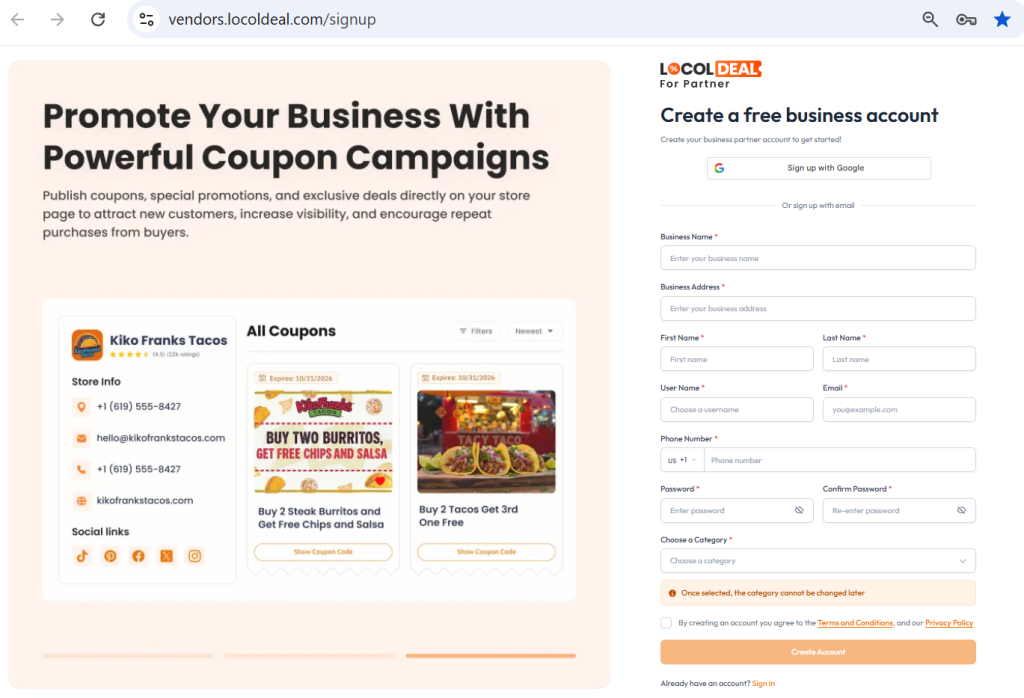
On top of that, LocolDeal offers a free coupon addition platform, so publishing a deal takes minutes — no developer, no complicated setup. Just log in, add your offer, and it’s live for nearby customers to find and redeem.
With easy coupon addition and business listing in one place, sign up free at vendors and start putting your deals in front of customers who are already looking for them.
Where LocolDeal Operates
LocolDeal currently connects local businesses with nearby shoppers in:
- New York
- Denver
- Los Angeles
- Flint Hill and more locations where LocolDeal operates.
If your business is based in one of these areas, listing on LocolDeal puts your deals directly in front of shoppers searching for offers near them — no ad spend required to get discovered.
Conclusion
Measuring coupon ROI isn’t about one magic formula — it’s about tracking the right numbers consistently, testing what resonates, and paying attention to both the immediate sale and the longer relationship it builds. The businesses that treat every coupon as a small experiment, not just a discount, get sharper and more profitable with every campaign that follows.
Quick ROI Checklist
- Define your goal before you launch
- Pick 2–3 KPIs to track per campaign
- Track both direct sales and indirect impact (repeat visits, referrals)
- Compare total revenue against total campaign cost
- Use unique or trackable codes wherever possible
- Monitor redemption rate against past campaigns
- Test different discount formats, timing, and channels
- Set limits to prevent duplicate or fraudulent redemptions
- List your business and coupons free on LocolDeal to reach more local customers — without the marketing spend
Frequently Asked Questions
How often should I run coupon campaigns?
There’s no fixed number, but running discounts too frequently can train customers to wait for a deal before buying at all. Many local businesses find a healthy rhythm with seasonal or milestone-based campaigns (a grand opening, a slow month, a holiday) rather than constant, ongoing discounts.
What’s a “good” redemption rate?
It varies by industry and offer type, but most generic digital coupons land in the low single digits. A well-targeted, locally distributed deal — especially one shown to shoppers already looking nearby — tends to significantly outperform that benchmark.
Do I need special software to track coupon ROI?
Not necessarily. A simple spreadsheet tracking cost, redemptions, and revenue per campaign is enough to start. As you scale, unique codes and a platform that logs redemptions automatically — like LocolDeal — make the process far more accurate and far less manual.