
 By Pallavi Thakur
New York is one of the most competitive markets in the world for small businesses. With thousands of shops, restaurants, salons, and service providers all vying for the same customers, standing out takes more than a nice storefront or a good product. If you want to advertise a small business in New York successfully, it takes a smart, affordable advertising strategy that gets your business seen by the people who are actually looking for what you offer — without draining your marketing budget.
Here are the key strategies small business owners in New York are using right now to grow their customer base, and how a platform makes each one easier to execute.
1. Offer Exclusive Deals and Coupons
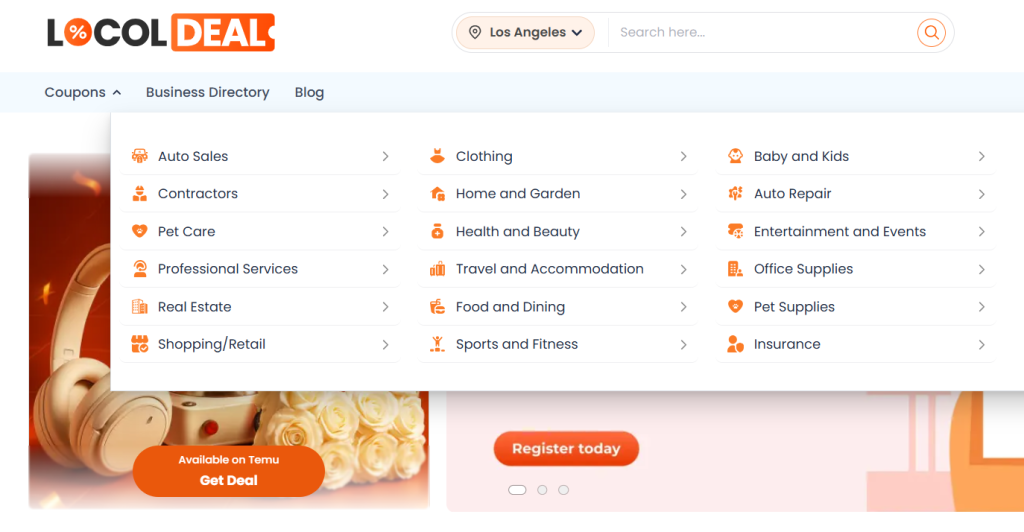
Nothing draws in new customers faster than a genuine deal. Discounts and coupons give people a reason to try your business today instead of “someday.” Business owners can post their best offers directly to a local audience actively browsing for deals in their area. Instead of hoping a passerby notices a sign in your window, your discount is put in front of people who are already shopping with intent to save.
2. Build Word-of-Mouth Through Customer Engagement
Word-of-mouth is still one of the most powerful forms of advertising — a satisfied customer who got a great deal is far more likely to tell friends and family about your business. By consistently posting fresh offers and engaging deals, small businesses using LocolDeal keep customers talking, sharing, and coming back, which naturally expands their reach without any extra ad spend.
3. Reach a Wider Local Audience Without High Marketing Costs
Traditional advertising — print ads, billboards, paid social campaigns — can be expensive and out of reach for many small businesses. LocolDeal was built to solve exactly this problem: it gives businesses an affordable way to advertise and acquire new customers at a fraction of the cost of conventional marketing. Whether you’re a single-location shop or competing with national chains, you get access to the same audience without the same price tag.
4. Turn First-Time Customers into Loyal Regulars
Attracting a new customer is only half the battle — keeping them is what actually grows a business long-term. Offering repeat deals and loyalty-driving promotions through LocolDeal helps small businesses stay top-of-mind, encouraging customers to return again and again rather than being a one-time visit.
5. Make It Easy for Customers to Discover You
In a city as large as New York, visibility is everything. Customers on LocolDeal can browse freely or create a free account to find local deals, alongside savings from national chains — meaning your business is sitting in the same space as major brands, discoverable by anyone searching for deals in your category. This levels the playing field for independent businesses competing against bigger names.
6. Promote Your Business in Minutes, Not Months
Speed matters. Many small business owners don’t have time for lengthy ad approval processes or complex campaign setups. With LocolDeal, promoting your business is straightforward: create a free account and start posting your best offers right away. There’s no long onboarding process standing between you and your next customer.
How to Get Started with LocolDeal?
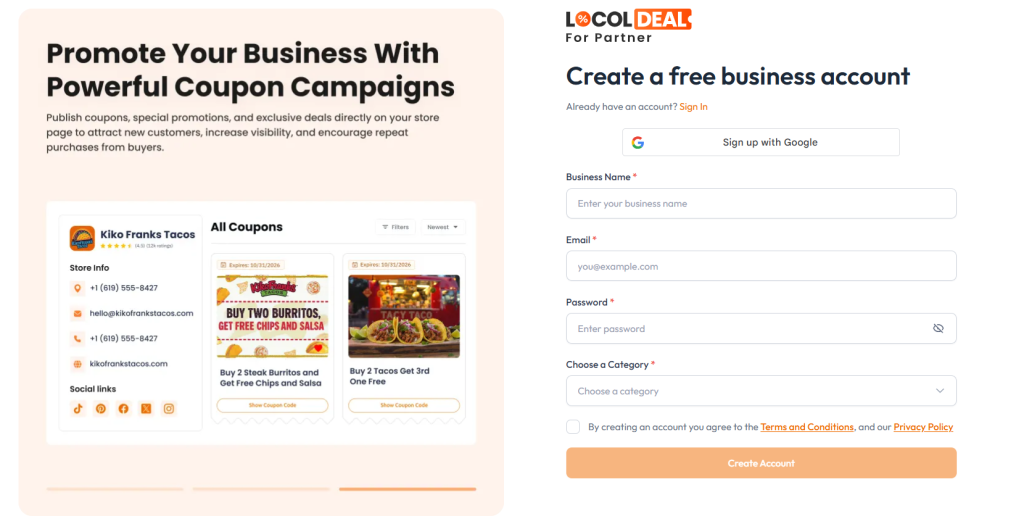
Setting up your business presence on LocolDeal takes just a few steps:
- Go to the Vendor Signup page
- Create your free business account
- Enter your Business Name
- Add your Email
- Choose a secure Password
- Select your Business Category
That’s it — your business is ready to start posting deals and reaching new customers.
Customers looking to browse deals can also sign up here or explore offers without creating an account at all.
Final Thoughts
If you’re ready to advertise a small business in New York without competing dollar-for-dollar with big-budget marketing campaigns, the strategy is simple. By offering exclusive deals, encouraging word-of-mouth, and making your business easy to discover, you can attract new customers and build lasting loyalty — all at a fraction of the cost. Our services bring all of these strategies together in one simple, free-to-join platform, making it easier than ever for New York’s small businesses to grow.
Frequently Asked Questions
What are the best ways to advertise a small business?
The best results come from mixing free and low-cost channels rather than relying on one. Set up a Google Business Profile, stay active on social media, and encourage happy customers to leave reviews and refer friends. Local deal platforms like LocolDeal let you post exclusive offers directly to nearby shoppers actively looking to save. The strongest strategy blends online visibility with real-world word-of-mouth, giving customers both a reason to notice you and a reason to talk about you.
What is the 3-3-3 rule in marketing?
The 3-3-3 rule breaks marketing down into three core messages, three target audience segments, and three marketing channels. Rather than spreading a brand thin across every platform with inconsistent messaging, a business picks its three most important audience groups, crafts three clear, consistent messages, and focuses effort on the three channels those audiences actually use.
What are the 5 main advertising techniques?
The five most common advertising techniques are repetition, which builds brand recall through repeated mentions of a product or company name; claims that describe product features or benefits to inform and build expectations; association, which links a product to a celebrity, jingle, or desirable feeling to create an emotional connection; the bandwagon approach, which convinces customers that everyone else is already buying in; and promotions and rewards, such as coupons or limited-time offers that create urgency.
What are the 7 most commonly used branding strategies?
The seven most common branding strategies are product branding, corporate branding, service branding, personal branding, geographic branding, cultural branding, and retail branding. Product branding makes a single item recognizable through consistent design; corporate branding builds trust around the company name itself; service branding covers intangible offerings; personal branding centers on an individual’s reputation; geographic branding ties a business to a place; cultural branding taps into shared values; and retail branding shapes the in-store or online buying experience.